Showing posts with label Air Travel. Show all posts

Sunday, September 13, 2026

Fees, Bags, and Basic Economy: How to Win the Modern Airfare Game

 When full-service carriers like American, Delta, and United first followed ultra-low-cost airlines down the road of "unbundled" airfares (commonly marketed as Basic Economy), the premise was simple: pay less for just the seat, or pay standard rates for normal perks like checked bags and advance seat selection.

Fast forward to today, and unbundling has expanded across the industry. Overhead bin access is restricted on certain basic fares, checked luggage fees hit record highs, and choosing a seat together often comes at a premium.

So, how are travelers coping with bare-bones pricing, what does the data say, and where is airline pricing heading next?

1. What Are Consumers Doing?

Travelers are taking distinct paths depending on their budget, packing style, and tolerance for hassle:

  • The "One Bag" Adaptation: A significant portion of leisure travelers has embraced strict minimalist packing. Demand for specialized travel backpacks and compact under-seat duffels (designed specifically to match 18" × 14" × 8" personal-item dimensions) has surged. Travelers are investing once in smartly engineered luggage to avoid repeated bag fees.

  • Paying the "Buy-Up" Premium: Rather than dealing with restrictions, many travelers simply pay for Main Economy or buy bag add-ons à la carte. For families or passengers traveling for longer durations, paying peak luggage fees has essentially become a mandatory tax on top of the base airfare.

  • Loyalty & Credit Card Workarounds: Frequent flyers are using airline cobranded credit cards to bypass the restrictions. Holding an airline card often restores perks like a free checked bag or priority boarding, nullifying the downside of lower-tier tickets.

2. What Does the Research Say?

Market research and industry analytics highlight clear trends in traveler behavior:

  • The "Upsell" Strategy Works: According to industry reports and economic analyses of Basic Economy, 50% to 70% of consumers choose to "buy up" to standard economy when presented with the restrictions during booking. Airlines designed Basic Economy not just to compete with low-cost carriers, but as a dynamic behavioral nudge to make standard fare tiers look more attractive.

  • Total Trip Costs Are Up: Academic studies on unbundled pricing reveal that while base fares decreased slightly when unbundling was first introduced, the overall cost of travel (base fare plus mandatory add-ons) increased on average.

  • Luggage Market Shift: The travel gear industry has shifted heavily toward lighter, compact personal-item models. Luggage manufacturers report shorter replacement cycles as travelers look for hyper-functional bags designed to maximize every inch of under-seat storage.

3. What Are Airline Executives Saying?

Airline executives view unbundling as a cornerstone of modern revenue management:

Glen Hauenstein (President, Delta Air Lines): Has frequently referred to Basic Economy as an essential revenue management tool designed to segment the market, giving price-sensitive travelers a low base entry point while nudging the vast majority (50% to 70%) to "buy up" into standard economy fares.

Major network carriers report that ancillary revenue, money earned from baggage fees, seat selection, lounge access, and credit cards, generates tens of billions of dollars annually. Executives emphasize that unbundling provides consumer choice, framing fees as a way to keep base fares low for travelers who truly want to travel light.

4. What Can We Expect in the Future?

TrendWhat It Means for Travelers
Dynamic Ancillary PricingBaggage and seat fees will vary dynamically based on route demand, booking window, and flight occupancy.
Automated Gate EnforcementAirlines are increasingly using automated scanners and sizers at boarding gates to enforce carry-on and personal item rules, reducing manual checks.
Subscription & Bundle OffersExpect more subscription models (e.g., annual baggage passes or seat-selection bundles) targeted at frequent leisure travelers.
Personalized Fare OffersAirline booking engines will use machine learning to present tailored packages based on past travel habits (e.g., automatically offering a seat + bag bundle for family trips).

 Unbundled airfares aren't going away. Winning the unbundled fare game comes down to calculating your total cost of travel before clicking buy, weighing ticket price plus baggage and seat fees against standard economy or credit card perks.

How Can a Travel Agent Help You Get the Best Value on Airfares and Baggage?

In an era of dynamic pricing and unbundled fares, navigating the fine print can feel like a full-time job. While online travel search engines show low initial prices, a travel advisor looks at the total picture to ensure you aren't hit with unexpected charges at the airport.

Here is how a travel agent delivers real value to protect your budget:

  • Calculating the "True" Total Cost: An advisor evaluates your full itinerary, including how many bags you need to bring and whether seat assignment matters to you, before picking a carrier. A $200 Basic Economy ticket on Carrier A might quickly hit $320 once bag fees and seat selections are added, whereas Carrier B’s $260 standard fare might include your checked bag and personal item, saving you $60 overall.

  • Leveraging Insider Systems & Fare Filters: Professional booking systems allow advisors to filter out overly restrictive basic fares or bundle services together directly. They can access special bundled agency rates or package fares (combining flights + hotel) that often restore complimentary baggage allowances or waive standard change fees.

  • Maximizing Status & Card Perks: If you hold airline status or co-branded credit cards, a travel advisor ensures those benefits are correctly linked to your booking profile so you don't accidentally pay for perks (like checked bags or priority boarding) you’re already entitled to.

  • Navigating Complex Interline Baggage Rules: If your trip involves multiple airlines (e.g., flying a domestic leg on one carrier and connecting internationally on another), baggage fees and weight limits often default to different rules. Travel agents manage these transfers to ensure your luggage is checked through to your final destination without double fees.

  • Advocacy When Things Change: If flight schedules shift or cancellations occur, Basic Economy tickets are notoriously rigid. A travel advisor acts as your advocate, navigating airline rebooking desks so you aren't forced to re-purchase tickets or pay steep re-ticketing penalties on restrictive fares.

At the end of the day, navigating the modern world of basic economy comes down to knowing your travel style and knowing where the hidden costs live before you hit "book." Whether you’ve mastered the art of packing two weeks into an under-seat backpack, found clever ways to leverage credit card perks, or simply accepted the baggage fee as a cost of doing business, we want to hear how you handle unbundled airfares.

Over to you: What’s your go-to strategy for beating basic economy fees? Have you found a personal-item bag that actually fits every airline sizer, or do you always opt for standard economy to save yourself the stress? Drop your favorite tips, carry-on wins, or airport horror stories in the comments below!

Tuesday, September 8, 2026

Why Are Airlines Getting So Strict About Carry-On Bags?

 Have you ever boarded a flight, walked down the aisle toward your row, and felt that sudden surge of panic when you noticed every single overhead bin was already jammed full?

It’s a scenario most travelers know all too well. As airlines around the globe roll out stricter rules and lower weight limits for carry-on luggage, it can feel like carrier policies are just getting more complicated.

Recently, aviation safety researcher and former pilot Natasha Heap shed light on the exact reasons airlines are cracking down on cabin baggage—and why those rules differ so wildly depending on who you fly with.

Here is what every traveler needs to know before packing for their next trip.

1. Safety and Weight Calculations Aren't What They Used to Be

At the heart of every flight is a fundamental rule of aviation physics: a plane cannot exceed its Maximum Take-Off Weight (MTOW).

That maximum limit accounts for the total combined weight of:

  • The empty aircraft structure

  • Jet fuel

  • Food, drinks, and galley equipment

  • Pilots and flight crew

  • Passengers and all their belongings

While checked bags are weighed individually at the gate or check-in desk, airlines don't weigh every passenger and hand bag for larger commercial flights. Instead, aviation authorities set regulated average passenger weights.

When pilot Natasha Heap started flying in 1998, Australia's regulated average adult passenger weight was 77 kg (about 170 lbs), excluding carry-on bags. As global population averages have risen, aviation safety regulators updated these figures. For medium-capacity aircraft like a Boeing 737, standard adult weight allowances are estimated at 180.34 pounds for men and 147 pounds for women, with an assumed average carry-on weight of 15.4 pounds.

Airlines are permitted to work with regulators like the Civil Aviation Safety Authority (CASA) or the FAA to establish custom weight policies based on their passenger demographics, which is why baggage rules vary across carriers.

2. The Rise of Low-Cost Carriers and "Ancillary Revenue"

If carry-on rules felt much more standard a decade ago, that’s because they were. The shift began with the rise of low-cost budget carriers.

Budget airlines pioneered the unbundled fare model: charging a low price for the seat itself, then monetizing extra services, known in the industry as ancillary revenue.

Revenue StreamWhat It CoversGlobal Industry Value
Base FareSeat, flight transportCore ticket sales
Ancillary FeesCarry-on upgrades, seat selection, onboard Wi-Fi, snacks$144 Billion+

Because travelers frequently try to pack everything into a carry-on to avoid checked bag fees, overhead bins fill past capacity. In response, airlines have placed stricter limits, and heftier gate-check penalties, on oversized or heavy cabin luggage.

3. Protecting Cabin Crew and Speeding Up Evacuations

There are two critical operational reasons flight crews enforce carry-on restrictions so strictly:

  • Crew Physical Safety: Flight attendants frequently suffer back, neck, and shoulder injuries trying to lift or reposition heavy suitcases into high overhead compartments.

  • Emergency Evacuation Risks: In the rare event of an emergency evacuation, passengers halting to grab heavy bags from overhead bins drastically slows down the process, putting everyone on board at risk.

Wednesday, July 30, 2025

Unraveling Airplane Enigmas: What Do All Those Weird Noises Mean?

 Welcome back to the Come Monday Travel blog! As part of our "Travel Terms and Knowledge" series, we're diving into a topic that has probably crossed every traveler's mind at some point: all those mysterious sounds an airplane makes. From subtle hums to unexpected clunks, understanding these noises can turn a moment of worry into a moment of "Aha!" So, let's demystify the symphony of flight!

Before Takeoff: The Ground Crew's Overture

  • Bumps Under Your Feet: Ever feel a series of bumps while boarding? That's usually the baggage handlers hard at work, loading suitcases and cargo into the plane's belly.

  • Banging in the Galley: If you hear banging sounds coming from the front or back of the plane, especially near the galley, it's likely the catering crew. Food and beverage carts are heavy, and moving them around can create quite a ruckus. Flight attendants might also be reorganizing supplies.

  • Grinding by the Wings (Airbus Specific): If you're on an Airbus aircraft and seated near the wings, a repetitive grinding sound during taxiing isn't a cause for concern. It simply means the power systems are gearing up for flight. This sound is characteristic of Airbus planes.

  • Hard, Crackling Sound (Colder Months): During colder weather, a loud crackling sound from outside the aircraft is often the de-icing process. Mobile de-icers spray a special fluid to remove any ice or snow from the plane's exterior.

In the Air: The Flight's Soundtrack

  • The Double Ding (10,000 Feet Mark): This distinct double chime, heard a few minutes after takeoff and again about 15-20 minutes before landing, is a crucial signal from the pilots to the flight attendants. It indicates that the aircraft has passed 10,000 feet on ascent or is below 10,000 feet on descent. These are known as "sterile flight deck" phases, meaning communication with the cockpit is limited to emergencies only.

  • Chimes Galore – Deciphering the Dings:

    • Double Chime (High and Low Tone): This is the sound of the flight attendants communicating with each other using the internal phone system.

    • High Single Chime: Heard this one? A passenger has pushed their call button, signaling they need assistance – anything from an extra set of earbuds to a more urgent request.

    • Low Single Chime: This chime accompanies the seatbelt sign turning on or off, indicating changes in safety conditions.

  • A Constant Beeping: If you hear a more insistent beeping, chirping, or a rapid high/low chime, it's typically the smoke alarm in the lavatory. This usually means someone has been smoking or vaping, not necessarily an actual fire.

  • Creaking Sounds: Particularly in some sections of Airbus planes, like the galley areas, creaking during takeoff and landing is normal. It's often just the plastic housing for various components reacting to the aircraft's movements.

  • A Whooshing Sound (Near Bathrooms): That loud motor or whooshing sound you hear near the lavatories every time someone flushes is the vacuum system for the plane's plumbing. It's quite loud due to the pressure differences involved.

Approaching Landing: The Descent's Crescendo

  • Grinding or Whining Below (Before Landing): As you begin your final descent, you might hear a grinding or whining sound, sometimes accompanied by a slight vibration. This is the landing gear (wheels) being lowered into place by hydraulic mechanisms.

Rare But Important Sounds:

  • A Loud Pop: This is a very rare and serious sound, indicating an issue with cabin air pressure and rapid decompression. If you hear this, oxygen masks will deploy automatically.

  • A Noticeable Hissing Sound: A continuous hissing suggests an insidious decompression, a slower loss of air pressure. If you hear this, especially near emergency exits or windows, it's crucial to immediately inform the flight crew.

Next time you're soaring through the skies, armed with this knowledge, those "weird" airplane noises will no longer be a mystery. Instead, they'll be a reassuring soundtrack to your journey. Happy travels from Come Monday Travel!

Thursday, July 17, 2025

The Mystery of the Dimming Cabin Lights: Your Flight to Paradise Just Got a Little Clearer!

Ever found yourself settling into your seat, ready for that "fins to the left, fins to the right" kind of adventure, when the cabin lights take a gentle dip just as you're about to soar or touch down? For many a seasoned traveler, it's just part of the pre-flight ritual, as familiar as the safety briefing. But if you're like me, you might have wondered about the real scoop behind this little cabin magic trick. Is it just to set a relaxed mood for our journey to a "Cheeseburger in Paradise"? Well, pull up a comfy chair, perhaps with a piña colada in hand, and let's spill the coconuts!

Turns out, this seemingly simple act of dimming the cabin lights during takeoff and landing isn't just about ambience; it's a super-smart move for your safety, designed to make sure your journey is as smooth and worry-free as possible.

The Real Reason Behind the Dimming Glow

Imagine, if you will, the gentle transition from a brightly lit cabin to the outside world, whether it's the twilight hues or the deep canvas of a starry night. Our eyes, much like a seasoned sailor adjusting to the shifting seas, need a moment to acclimate. And that, my friends, is the heart of the matter!

The primary reason for dimming the lights is to prepare your eyes for potential low-light conditions should an unexpected emergency evacuation be needed. Think of it as giving your peepers a head start! If the cabin were brightly lit and you suddenly had to evacuate into darkness, your eyes would take precious seconds—or even minutes—to adjust. By dimming the lights in advance, your eyes are already getting used to a darker environment, making it much easier to:

  • Spot those glowing emergency exit signs: They'll pop right out, guiding your way to safety like a lighthouse in a tropical storm.

  • Follow the illuminated floor paths: These low-level lights become far more visible in a dimmed cabin, showing you the quickest route out.

  • Help the crew: The flight attendants, your guardians of the sky, can better see any external hazards like smoke or fire and make crucial decisions swiftly. It’s all about creating the best conditions for a quick and orderly "escape to Margaritaville" if the unexpected happens.

While it's mostly about safety, there's a tiny, almost imperceptible added bonus: it can slightly reduce the plane's electrical load during these critical phases, contributing to overall efficiency. Every little bit helps, right?

Flying with the Flock: Tips for Families and Couples

Knowing these little insights can certainly bring peace of mind, especially when you're traveling with your favorite co-pilots – be it your family or your beloved. Here are a few Come Monday Travel tips to make your flight even more breezy:

  • Seating Strategy is Key: For families, consider booking seats together early. Many airlines have policies for seating children with adults, but confirming this in advance can save a lot of "pop-top" moments at the gate. Rows near the front can mean a quicker exit, while those further back might offer a bit more space or proximity to restrooms, which is a blessing with little ones! Couples might enjoy a window and aisle seat in a two-seat configuration, offering both a view and easy access.

  • Pack Smart, Not Heavy: Keep essentials like snacks, small activities, and comfort items (think a favorite blanket or soft headphones) easily accessible in a personal bag under the seat in front of you. This means no rummaging in overhead bins during critical moments.

  • Embrace the Journey: Sometimes the best travel hack is a relaxed mindset. Whether it's a family adventure or a romantic escape, a little flexibility goes a long way. Think of it as finding your own "five o'clock somewhere" no matter what time it actually is!

Ready to Chart Your Course?

Understanding the small nuances of air travel, like why the lights dim, helps make the journey part of the adventure. At Come Monday Travel, we believe your vacation should be about soaking in every moment and creating unforgettable memories, free from stress. My wife, Rebecca, and I, Bruce, along with our dedicated team, are here to ensure every detail is handled with the care it deserves.

Don't let the little mysteries of travel dim your vacation dreams. From finding the perfect family-friendly seating to ensuring every part of your itinerary is as relaxed as a lazy day on the beach, we're here to help. Contact Come Monday Travel to schedule a consultation call, and let us help you chart the course to your next paradise!

Tuesday, July 15, 2025

Don't Let Delays Sink Your Ship: Your Guide to Smooth Sailing (Even When the Skies Get Shaky)

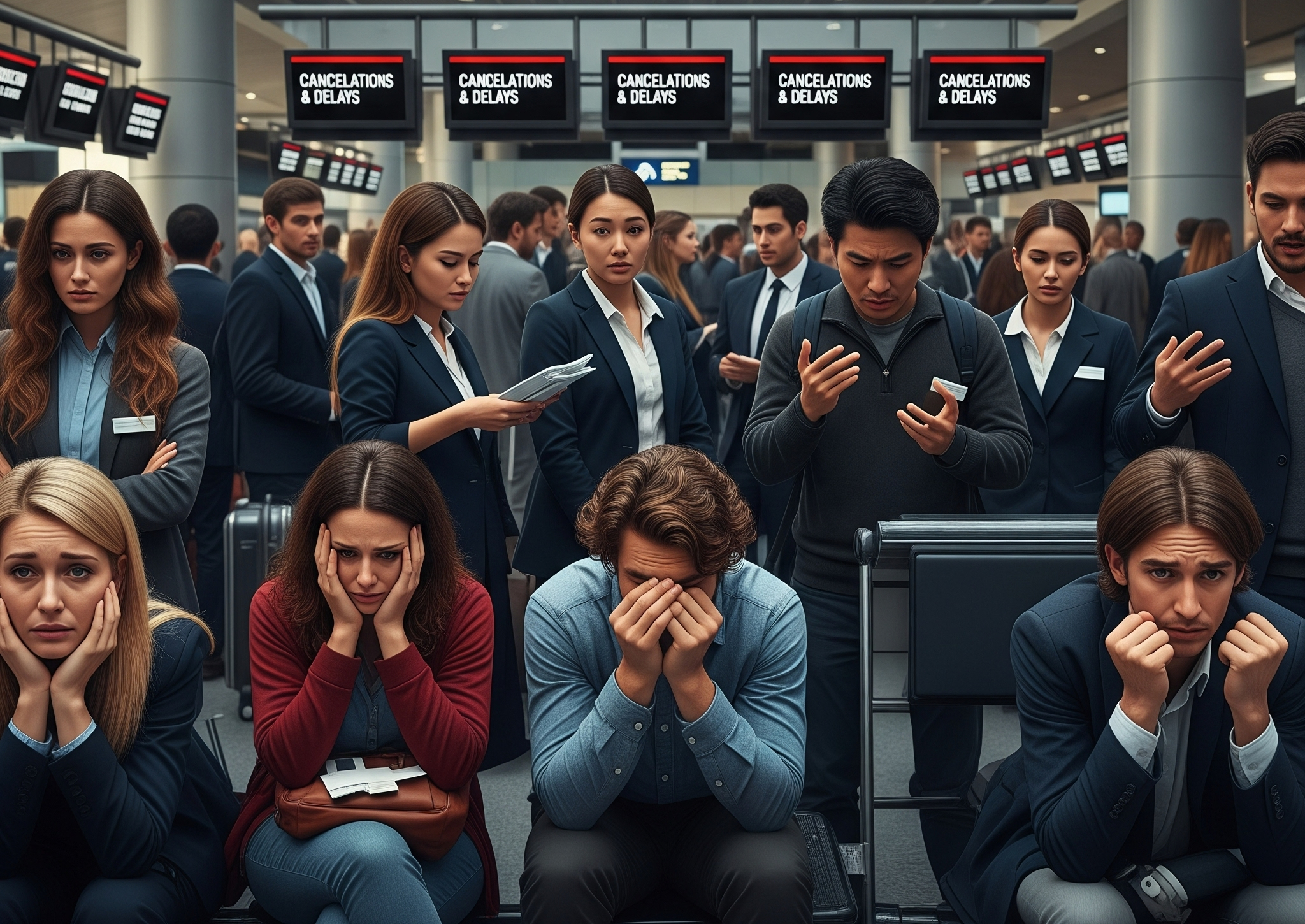
Ahoy there, fellow travelers! Bruce here, from Come Monday Travel, and I’m sending this dispatch from a world that sometimes feels a little less "fins to the left, fins to the right" and a bit more "weather delays and grounded flights." You might have seen the recent headlines, relentless weather sweeping across the US, causing over 2,000 flights to go into disarray at major hubs like JFK, Miami, and Boston. Airlines like JetBlue, Southwest, and United have been hit hard, leaving thousands of hopeful vacationers feeling a bit like a ship without a sail.

It’s enough to make even the most seasoned traveler feel a little blue, but don't you fret! At Come Monday Travel, we're all about that "no worries" feeling, and moments like these truly highlight why having a trusted travel partner in your corner is more essential than ever.

Navigating the Stormy Seas with a Travel Agent

When chaos erupts at the airports, trying to rebook flights, find accommodations, and salvage your vacation can feel like trying to find a "cheeseburger in paradise" in a blizzard. This is where your dedicated travel agent truly shines. Think of us as your personal hurricane preparedness kit for your travel plans!

  • Your Personal Problem-Solver: When flights are cancelled and you’re stranded, you won't be stuck on hold for hours with an airline. We’re already on it, working tirelessly to find alternative routes, negotiate with airlines, and rearrange your itinerary. For families juggling kids or couples on a romantic escape, this peace of mind is priceless. We handle the stress so you can focus on making memories, even if those memories initially involve an unexpected layover.

  • Expert Guidance: We have the inside scoop. We understand the nuances of airline policies, know which routes might be less prone to specific weather patterns, and can often anticipate potential issues before they become major headaches. This expertise is especially valuable for couples looking for that perfectly timed romantic getaway or families with teens who need seamless transitions between activities.

Charting a Course: Arrive Early for Your Cruise!

If your dream vacation involves setting sail on the open sea, taking a page from the Boy Scout handbook "Be Prepared" is key. The recent airline disruptions are a stark reminder: do not plan to arrive in your cruise departure city on the same day your ship sets sail!

Imagine this: you've packed your best flip-flops, your swimsuit is ready, and you're dreaming of piña coladas by the Lido deck, only to have your flight delayed by a relentless storm. Missing your cruise embarkation due to flight delays is a truly disheartening experience, and unfortunately, it happens more often than you'd think.

Bruce's Golden Rule: For cruises, always plan to arrive at least one day early. This gives you a delightful buffer against any unexpected travel hiccups, like those recent widespread flight cancellations. You can relax, explore the port city a bit, and start your vacation early, knowing you'll be well-rested and ready to board your floating paradise. It’s all about kicking back and sinking into that "Cheeseburger in Paradise" state of mind, without the last-minute dash!

Your Safety Net: Travel Insurance

Let's talk about travel insurance. It's not the most glamorous part of vacation planning, but it's the life raft you want when the unexpected waves hit. In the face of widespread weather-related delays and cancellations, travel insurance can be your financial guardian angel.

  • Protection Against the Unpredictable: From flight cancellations to lost luggage or even medical emergencies abroad, a comprehensive travel insurance policy can cover unexpected costs and provide assistance when you need it most. For families, this means not having to worry about costly last-minute hotel stays or rebooked flights if a storm grounds your plane. For couples, it protects that romantic getaway investment.

  • Reimbursement for the Unexpected: Many policies offer reimbursement for non-refundable expenses, like pre-paid excursions or hotel nights, if your trip is interrupted or cancelled due to covered reasons. Don't let a sudden shift in the weather forecast ruin your financial plans along with your vacation.

Let Come Monday Travel Chart Your Course!

Here at Come Monday Travel, my wife, Rebecca, and I, Bruce, are all about making your travel dreams come true, free from the stress and worry that recent events can bring. Whether you're an empty nester seeking new discoveries, a family with teens ready for unforgettable experiences, or a couple desiring that perfect romantic escape, we've got you covered. We'll handle every detail, from navigating flight options to securing travel insurance and ensuring you arrive at your cruise port with time to spare.

Don't let the unpredictable nature of travel deter you from your next adventure. Your only job is to relax, explore, and soak in every moment. Let Come Monday Travel chart the course, and you just enjoy the ride!

Ready to plan your next stress-free escape? Contact Come Monday Travel to schedule a consultation call today! We'll help you find your personal slice of paradise, no matter what the skies may bring.

Sunday, July 13, 2025

Navigating the TSA: A 'No Worries' Guide to Smooth Sailing through Security

Welcome, fellow Parrot Heads and wanderers! Bruce here, ready to help you chart a course for your next great escape. We all know that moment when the excitement of a trip hits the checkpoint wall. Airport security, with its long lines and mysterious rules, can sometimes feel like trying to find a misplaced shaker of salt.

But fear not! At Come Monday Travel, we believe travel should be about escape and joy, not stress. We're here to help you breeze through the TSA checkpoint with the laid-back ease of a sunset sail, ensuring you get to that "Cheeseburger in Paradise" state of mind faster.

Whether you’re wrangling a family crew or just you and your favorite travel partner, a little preparation goes a long way. So, let’s talk about a few things you can do to make your journey to the beach (or the mountains, or the theme park!) as smooth as a piña colada.

The Lowdown on Liquids and Other Mystery Items

The infamous 3-1-1 rule for liquids, gels, and aerosols is still the cornerstone of carry-on packing. Remember: 3.4 ounces or less per container, all fitting in one quart-sized clear bag, one bag per passenger.

But what about the rest of your packing list? The TSA has guidelines for everything from tools to sporting goods. While they may have some new "banned" items out there (perhaps a whimsical, imaginary list, but the real rules are serious business!), the basics remain. Sharp objects, firearms, and explosives are, of course, off the list.

For our traveling couples and families, there are a few important exceptions to keep in mind:

  • Medication: Solid medication is generally fine, but liquid medication is allowed in reasonable quantities exceeding the 3-1-1 limit.

  • Baby Essentials: Traveling with little ones? Baby formula, breast milk, and juice are exempt from the 3-1-1 rule and can be brought in "reasonable quantities." Just be prepared for these items to be screened separately and potentially tested.

When in doubt about a specific item, always check the official TSA guidelines or the airline's website. If you’re questioning whether your vintage seashell collection will pass muster, it’s best to ask ahead of time!

The TSA's 'What Were They Thinking?' List

Sometimes, the list of prohibited items reads like a lost and found from a tropical pirate's chest. While most of us wouldn't try to sneak a cutlass onto the plane, some items that seem innocent enough can cause a ruckus at security.

Get ready for a chuckle, because the TSA has a few surprising rules that make you scratch your head:

  • The Magic 8 Ball: Sorry, future-seekers, but this novelty toy is a no-go in your carry-on. Why? Because it’s full of liquid. The TSA even has a sense of humor about it, noting on their website: "For Carry-on bags: We asked the Magic 8 Ball and it told us... Outlook not so good! For Checked bags: We asked the Magic 8 Ball and it told us... It is certain!" Looks like your travel fortune will have to wait for your checked luggage.

  • English Christmas Crackers and Party Poppers: Forget about bringing the festive fun onboard. These items contain flammable materials and are strictly prohibited in both checked and carry-on bags. No spontaneous celebrations at 35,000 feet, folks!

  • Toy Foam Swords: While they might look harmless, especially for your little buccaneers, these toys are often flagged because they resemble real weapons. While you can’t bring them in your carry-on, you can pack them in your checked luggage for that Comic-Con costume or backyard adventure.

  • Gel-type Candles and Heat Therapy Gel Pads: Hoping to set a romantic mood with a gel candle in your hotel room, or ease a sore back after wrestling luggage into the overhead bin? These are considered liquids by the TSA. Unless they meet the 3-1-1 requirements, they need to be checked.

Prepping for a 'Fins to the Left' Security Experience

Getting through security with a family can feel like herding flamingos, but we have a few tips to keep everyone relaxed and moving efficiently:

  • TSA PreCheck is Your Best Friend: For couples, if you both have TSA PreCheck on your boarding passes, you’re in for a treat. You can usually leave your shoes on and keep laptops and liquids in your bags. For families, children 12 and under can join you in the TSA PreCheck lane without the indicator on their pass. If one adult doesn't have PreCheck, you must either separate or both go through the regular security line.

  • Keep Documents Handy: Have all boarding passes and IDs ready and organized.

  • Dress for Success: Opt for comfortable clothing. Think breezy layers. Avoid wearing anything with excessive metal, it just means more time spent in the scanning machine, which is time you could be spending daydreaming about margaritas! If you’re traveling with kids, dressing them in comfortable clothes that are easy to manage is a lifesaver. Remember, the less fuss at the checkpoint, the faster you get to the good stuff.

  • Simplify Your Carry-ons: Minimize loose items and ensure electronics (if you don't have PreCheck) are easily accessible in their own bins.

Let Come Monday Travel Handle the Details

Vacation planning should never feel like a chore. At Come Monday Travel, Bruce is dedicated to taking the stress off your shoulders, handling every detail from flights to accommodations, so you can focus on creating unforgettable memories.

Instead of navigating the complex world of security regulations and itinerary logistics yourself, why not let us handle the heavy lifting? We specialize in curating personalized, hassle-free getaways that capture that perfect sense of paradise.

Don’t let the thought of airport security deter you from your dream vacation. Contact Come Monday Travel today to schedule a consultation call, and let us help you chart the course for a journey where the only thing you have to worry about is whether you’ll have a blender or a bar on board!

Thursday, July 10, 2025

When Your Paradise is on Pause: Navigating Flight Delays with a Smile!

Hey there, fellow adventurers! Bruce here, from Come Monday Travel, and today we're talking about a little something that can sometimes throw a wrench in our perfectly planned escape to paradise: the dreaded flight delay. Now, I know what you're thinking – a delay? That's not very "Cheeseburger in Paradise" of them! But just like a sudden squall on the high seas, sometimes these things pop up. The good news is, with a little know-how and a laid-back attitude, you can navigate these choppy waters and still find your happy hour.

We've all been there, standing at the gate, picturing those turquoise waters or charming city streets, when the announcement comes: "Your flight has been delayed." It can feel like your Fins to the Left, Fins to the Right moment is suddenly going nowhere! But don't you fret. Here’s what Bruce and the Come Monday Travel crew recommend you do the moment your travel plans hit a little turbulence.

Your Immediate Game Plan: Keep Calm and Carry On (to the Information Booth!)

1. Be a Digital Detective, Pronto!

First things first, become best friends with your airline's app. Most major airlines, like United, American, and Southwest, will push real-time updates directly to your phone. This is often faster than waiting for a gate agent or joining a lengthy line. You might even find options to rebook yourself right there in the app! If the app offers a rebooking to a new time or even a nearby airport, don't hesitate to snag it, especially if it keeps your family's or couple's itinerary on track.

2. Connect with a Human (Strategically)

While the app is your first stop, sometimes you just need to chat with a real person. If you're at the airport, look for customer service agents. If you're still at home, try calling the airline's international numbers – they often have shorter hold times than the domestic lines. Remember, a friendly demeanor goes a long way, even when you’re feeling a bit like a coconut in a storm.

3. Know Your Rights, Parrot Head!

Did you know that if your flight is significantly delayed (usually 3+ hours for domestic and 6+ hours for international) and you decide not to travel, you might be entitled to a refund? The U.S. Department of Transportation has rules in place to protect passengers. For those long, unexpected layovers, you might also be able to get compensation for meals and hotels. Resources like AirHelp can even assist you in claiming what you're owed, making sure you get that extra cash for more umbrella drinks on your next adventure!

4. Make the Most of the Wait

A delay doesn't have to mean boredom, especially for families!

  • For the Little Parrotheads: Seek out airport play areas, ride the airport tram (it's a ride in itself!), or embrace some screen time with a favorite movie. A little distraction can go a long way in keeping spirits bright.

  • For the Couples: If you have lounge access, retreat to a quiet oasis for comfortable seating, Wi-Fi, and perhaps even a complimentary snack or drink. It's a great place to gather your thoughts, charge your devices, and plan your next move. Or, find a cozy corner for a moment of quiet together, dreaming of sandy beaches.

Why the Hold-Up, Captain?

Flight delays can stem from a few common culprits. While we often think of mechanical issues or bad weather (which are certainly factors, requiring planes to maintain more distance or undergo de-icing), crew availability can also be a big one. Pilots and flight attendants have strict duty time limitations, and if a crew member isn't available, it can throw the whole schedule off.

Different aircraft types might also play a small role. While window alignment won't cause a delay, knowing your aircraft can sometimes give you insights. For instance, larger wide-body planes like the Boeing 747 or Airbus A380 are often used for long-haul international flights and have more passenger capacity, meaning more people to rebook if a delay occurs. Narrow-body aircraft like the Boeing 737 or Airbus A320 are workhorses for shorter domestic flights.

Charting a Smoother Course Next Time

While delays can be unpredictable, there are a few tips to help minimize your chances:

  • Book Morning Flights: They tend to be less prone to delays as the day's disruptions haven't accumulated yet.

  • Opt for Non-Stop: Fewer connections mean fewer chances for one delay to domino into another.

  • Consider Travel Insurance: This can be a real lifesaver, covering unexpected costs like hotels, meals, and alternative transportation if your flight runs significantly behind schedule.

Don't Go It Alone!

Feeling overwhelmed by the thought of juggling rebookings, refunds, and keeping everyone happy during a delay? That's precisely where a trusted travel advisor shines! Here at Come Monday Travel, Bruce and his team are experts in handling those unexpected bumps in the road. We can rebook flights, explore alternative routes, and advocate on your behalf, so you can keep that "no worries" feeling.

Ready to set sail on your next adventure without the stress? Don't let the possibility of a flight delay deter your dreams of paradise. Let Come Monday Travel chart the course and handle the details, ensuring your journey is as relaxed and joyful as a tropical breeze.

Contact Come Monday Travel to schedule a consultation call today! We're ready to help you plan your perfect escape, no matter what the tides bring.

Tuesday, July 8, 2025

No More Security Squalls: Debunking TSA Biometric Myths for Your Island Escape!

 Ahoy, fellow travelers! Bruce here, ready to whisk you away to a world where your biggest worry is choosing between a piña colada or a margarita, not navigating airport security. Today, we're busting some myths about TSA's biometric technology, so you can breeze through the airport feeling as carefree as if you were already on a white-sand beach.

When you're heading out on that dream family vacation or a romantic escape with your favorite parrot head, the last thing you want is a choppy sea of confusion at the security checkpoint. The TSA has been rolling out new biometric verification systems, primarily facial matching, and like any new tune on the radio, there's been some chatter. Let's clear the air and ensure your journey starts on a high note!

Myth #1: Biometric Verification is Compulsory. You're Stuck in the System!

Fact: Hold your horses, there, my friends! This is perhaps the biggest myth floating around, and it's simply not true. Much like choosing your favorite flip-flops for a beach stroll, participating in TSA's biometric technology tests is entirely voluntary. If you're not feeling that facial scan vibe, just let a TSA officer know you'd like to opt out. They'll simply process you the good old-fashioned way, by checking your ID. No fuss, no muss, just your journey continuing smoothly, like a calm tide rolling in. This is great news for families who might be a bit wary or couples who prefer to keep things traditional.

Myth #2: Your Biometric Data is Insecure and Will Be Stolen.

Fact: This myth conjures up images from a spy movie, doesn't it? But fear not, your face isn't going to be part of some grand heist! The TSA's current use of biometrics at the checkpoint is mainly for 1:1 facial matching. This means a camera takes a quick picture of you and compares it to the photo on your physical ID (like your driver's license or passport). The good news? The TSA states they do not store these images, except for limited periods during testing and evaluation. So, unlike your vacation photos that you'll cherish forever, those airport scans aren't hanging around. Your unique identity is as safe as your treasure map to paradise!

For our seasoned travelers who love the perks of programs like TSA PreCheck or CBP Global Entry, you might encounter 1:n (one to few) facial identification. This is still being developed and involves comparing your live image to a database of pre-enrolled photos. But even then, the focus is on enhancing efficiency and security for those who've chosen these trusted traveler programs, not on mass surveillance. The goal is to get you to your gate faster, perhaps even with time for a "cheeseburger in paradise" before boarding!

Why the Shift to Biometrics?

You might be wondering, why the change? Well, the TSA is always looking for ways to make your journey smoother and safer. They believe biometrics can:

  • Enhance Security: Automating the identity verification process can lead to greater accuracy than manual checks.

  • Improve Operational Efficiency: Think of it as finding your perfect spot on the beach without a dozen detours. These systems are designed to speed up lines, giving you more time to relax before your flight.

  • Streamline the Passenger Experience: Less time fumbling for IDs and more time dreaming of your destination.

Remember, the aim here is to make travel less of a chore and more of a pleasure. For families, this could mean less stress getting little ones through security. For couples, it's more uninterrupted time to enjoy each other's company before takeoff.

Don't Let Airport Worries Cloud Your Horizon!

Navigating the nuances of airport security, especially with a family or for a special getaway, can sometimes feel like trying to sail through a squall without a compass. But here at Come Monday Travel, Bruce is always ready to chart your course! We believe your vacation should start the moment you dream it, not when you clear security.

If the thought of new airport technologies or any other travel planning detail gives you pause, remember that you don't have to go it alone. We specialize in crafting seamless travel experiences, from the first thought of a destination to your joyful return. So, don't let those airport blues set in! Let Come Monday Travel handle all the details, ensuring your journey is as smooth as a Caribbean sunset.

Ready to set sail on your next adventure, free from worry? Contact Come Monday Travel today to schedule a consultation call. We'll help you find your "fins to the left, fins to the right" path to paradise!

Ahoy, fellow travelers! Bruce here, with a little something extra to keep your mind as clear as a calm ocean while you're navigating those airport terminals. We talked about how the TSA's biometric tech is designed to keep things smooth, but it's always smart to have your own personal 'hurricane shutters' up when it comes to your valuable information.

That's why I'd recommend a trusty RFID-blocking wallet. Think of it as a little shield for your credit cards and passport, protecting them from unauthorized scans. While the TSA's biometrics are about your face, an RFID wallet keeps your financial details and personal identification info tucked away safely, giving you that extra layer of peace of mind. It’s like having a little slice of paradise for your valuables, no matter where your journey takes you.


Keep Your Treasure Safe on the Go!

Just like you wouldn't leave your favorite beach chair out in a storm, you shouldn't leave your personal data vulnerable to digital pickpockets. A good RFID-blocking wallet is a small investment for a whole lot of security. It's designed to stop those sneaky electronic readers from wirelessly snatching your credit card numbers or passport details.

Imagine strolling through the airport, knowing your sensitive information is as protected as your best-kept vacation secrets. These wallets come in all sorts of styles, from sleek cardholders perfect for a romantic getaway to larger options that can hold all your family's travel documents securely.

Ready to add this essential piece of gear to your travel kit?

Men's bifold minimalist RFID wallet. 

(Just a friendly note from Bruce: This is an affiliate link, which means if you decide to purchase, Come Monday Travel might receive a small commission at no extra cost to you. It helps keep the margaritas flowing and the travel tips coming!)

Kicking Off Your Shoes (Literally!) – A Breezy New Era for Airport Security!


Hey there, fellow wanderers! Bruce here, ready to share some news that's as sweet as a piña colada on a sun-drenched beach. If you've ever felt that pre-flight scramble, juggling carry-ons, kids, and kicking off your shoes at airport security, get ready to feel a little more like you're already in paradise. The word from the tarmac is that the Transportation Security Administration (TSA) is easing up on the shoe removal rule at some U.S. airports!

For years, it's been a familiar dance: unlace, unstrap, and send your footwear through the scanner, all thanks to a rather infamous "shoe bomber" incident way back in 2001, which led to the rule's implementation in 2006. But now, it seems the winds of change are blowing, bringing a breath of fresh air (and maybe less sock-foot shuffling) to our travel routine.

Imagine this: you, your family, or your sweetie, strolling through security with a little more ease. No more frantic fumbling with tiny shoelaces while trying to keep track of a spirited little parrot head, or the awkward balance act as you take off your stylish sandals before that romantic getaway. This phased-in change means you might soon get to keep those shoes on your feet, making the whole process quicker and, frankly, a lot more hygienic. While it's starting at airports like:

  • Baltimore/Washington (BWI)
  • Fort Lauderdale (FLL)
  • Cincinnati/Northern Kentucky (CVG)
  • Portland (PDX)
  • Philadelphia (PHL)
  • Los Angeles (LAX)
  • New York City's LaGuardia (LGA),
The hope is it spreads like a good island rhythm!

Of course, those savvy travelers with TSA PreCheck already enjoyed this perk, along with expedited lanes and keeping laptops and liquids in their bags. But now, this little piece of "no worries" bliss is extending to everyone, a true testament to modern scanning technology. It’s all about finding that "fins to the left, fins to the right" path that makes your journey smoother from the get-go.

Travel should be about the joy of discovery, the warmth of new experiences, and leaving your cares far behind, not about the hassle of airport security. This update is a fantastic step towards a more relaxed start to your adventures, whether you're off on a family theme park escapade or a quiet cruise for two.

Even if you're keeping your shoes on, a pair of these cloud-soft, stylish travel socks can make all the difference. They're perfect for stretching out and finding your inner zen at 30,000 feet, keeping you cozy for that long flight to your next paradise! These are the socks that I enjoy wearing when flying - Comrad compression socks. 

And speaking of smooth sailing, if navigating all the ins and outs of travel planning feels like too much work before you even leave home, remember that Bruce and the team at Come Monday Travel are here to chart your course. We can help you with every detail, ensuring your trip is as breezy as a walk on the beach. Don't let airport anxieties or planning woes dampen your travel dreams; we're experts at crafting unforgettable getaways for families and couples, from Paradise & Play Escapes to our Explore America programs.

Ready to set sail for your next grand adventure without a single worry on your mind? Contact Come Monday Travel to schedule a consultation call. Let us take the stress off your shoulders and put that vacation smile on your face!

Sources:

Saturday, July 5, 2025

Seat Pitch: The Unsung Hero (or Villain) of Your Flight Comfort

Have you ever settled into an economy seat, stretched out your legs, and thought, "Wow, this is actually comfortable!"? Or, perhaps more often, have you felt like your knees were practically touching the seat in front of you, even before the meal cart came rattling by? The difference between these experiences often boils down to a single, often overlooked measurement: seat pitch.

At Come Monday Travel, we believe every traveler deserves to be comfortable, especially when soaring through the skies. In this installment of our "Travel Terms" series, we're pulling back the curtain on seat pitch – your ultimate legroom litmus test. Understanding this termcan truly transform your flying experience, particularly on those longer journeys.

Let's unpack what it means for you!


What Exactly is "Seat Pitch"?

While it might sound like something out of a baseball game, "seat pitch" in aviation is quite simple:

  • Definition: Seat pitch is the distance from a point on one seat to the exact same point on the seat directly in front of it (or behind it).

  • What it Measures: In practical terms, it's the primary indicator of how much legroom you'll have in your seat. It's not about the width of the seat, nor the recline, but the space between you and the row in front.

  • The Numbers: This measurement is typically expressed in inches. A higher number means more space. For example, a seat pitch of 32 inches offers noticeably more legroom than one of 29 inches.

Think of it this way: Imagine drawing a line from the back of your seat cushion to the back of the seat cushion in front of you. That distance is your seat pitch.


Why Does Seat Pitch Matter So Much?

For many travelers, particularly those on long-haul flights or taller individuals, seat pitch is paramount to comfort and well-being.

  • Legroom: This is the most obvious benefit. More seat pitch means you can stretch your legs more comfortably, reducing stiffness and the feeling of being cramped.

  • Freedom of Movement: Greater pitch allows you to shift positions more easily, get in and out of your seat (even when the person next to you is reclined), and generally feel less confined.

  • Personal Space: While not directly measuring width, more legroom can contribute to an overall feeling of having more personal space, reducing the "sardine can" sensation.

  • Working/Eating Comfort: If you plan to work on a laptop or enjoy your meal, sufficient seat pitch ensures you have enough room to use your tray table comfortably without your knees getting in the way.

  • Reducing Discomfort: On longer flights, inadequate legroom can contribute to discomfort, restlessness, and even exacerbate conditions like deep vein thrombosis (DVT).


Typical Seat Pitch Ranges (Economy Class)

While exact figures vary by airline and aircraft type, here's a general idea of what to expect in economy:

  • Tight: 28-30 inches (often found on budget carriers or older short-haul aircraft)

  • Standard: 31-32 inches (common for many mainline carriers)

  • Generous (for economy): 33-34+ inches (sometimes found on newer aircraft, specific routes, or in "economy plus" type sections)

Even a single inch can make a noticeable difference, especially over several hours!


How to Find Your Flight's Seat Pitch (and Why You Should!)

Don't leave your comfort to chance! Researching seat pitch before you book can be a game-changer.

  • Airline Websites: Some airlines provide details on seat pitch for their various aircraft types on their "fleet" or "about us" sections.

  • Seat Map Websites: This is your best friend! Websites like SeatGuru.com are invaluable resources. Simply input your airline, flight number, and date, and they'll show you the seat map for your specific aircraft, along with seat pitch, width, power outlet availability, and even passenger reviews for individual seats.

  • Aircraft Type: Become familiar with the aircraft type you're flying (e.g., Boeing 737, Airbus A320, Boeing 787). Seat pitch often varies more by aircraft model than by airline, though airlines do customize their cabins.

Pro-Tip: Even within the same airline and aircraft, there might be slight variations. Exit row seats and bulkhead seats (the first row in a cabin section) often offer significantly more legroom, though they may have other restrictions (e.g., no under-seat storage during takeoff/landing).


Your Turn! Does Seat Pitch Influence Your Booking Decisions?

Now that you're well-versed in the world of seat pitch, we'd love to hear from you!

Does seat pitch influence which flights you book, especially for longer journeys?

Or, share a memorable experience (good or bad!) related to legroom on a flight!

Let's discuss how we can all fly a little more comfortably. Share your thoughts in the comments below!


Stay tuned for our next "Travel Terms" post, where we'll delve into the fascinating world of codeshare agreements! Until then, from Come Monday Travel, here's to more comfortable skies!

Gate & Terminal: Your Airport's Address System – Navigating the Labyrinth with Ease

 Stepping into a bustling airport can feel like entering a mini-city, complete with its own intricate layout and unique vocabulary. Among the most fundamental terms you'll encounter are "terminal" and "gate." Understanding these isn't just about sounding like a seasoned traveler; it's essential for a stress-free journey, especially when time is of the essence.

At Come Monday Travel, we're dedicated to empowering you with the knowledge to navigate every aspect of your trip. In this installment of our "Travel Terms" series, we're breaking down the airport's address system: your gate and terminal.

Let's get oriented!


The Terminal: Your Airport Neighborhood

Imagine an airport as a large town. In this analogy, a terminal is like a distinct neighborhood or district within that town.

  • What it is: A terminal is a large, self-contained building within the airport complex where passengers check in, go through security, wait for flights, and board planes.

  • Multiple Terminals: Many major airports, especially large international hubs, have multiple terminals (e.g., Terminal 1, Terminal 2, Terminal A, Terminal B, International Terminal). These terminals can be connected by walkways, shuttle buses, or even internal trains.

  • Airline Assignment: Airlines are typically assigned to specific terminals. For instance, all flights for "Airline X" might operate out of Terminal 3, while "Airline Y" uses Terminal 1. This helps streamline operations and passenger flow.

  • Flight Types: Terminals can also be designated by flight type (e.g., domestic flights in one terminal, international flights in another). This is important because international departures and arrivals often have different security and customs procedures.

  • Your Journey Starts Here: You'll typically begin your airport experience at a specific terminal – this is where you'll find your airline's check-in counters, baggage drop-off, and the entrance to the security checkpoint for your flight.

  • Why it matters: Knowing your terminal is the first crucial step. Arriving at the wrong terminal can lead to significant delays, especially if you need to transfer between them, which can sometimes involve long walks or rides. Always confirm your terminal before heading to the airport.


The Gate: Your Plane's Front Door

Once you've navigated through security and are inside your designated terminal, your next mission is to find your gate.

  • What it is: The gate is the specific boarding area within your terminal where passengers wait to board their aircraft. It's essentially the "front door" to your plane.

  • Gate Numbers/Letters: Each gate has a unique identifier, usually a combination of letters and numbers (e.g., Gate A12, Gate C30, Gate B56). This number will be clearly printed on your boarding pass.

  • Finding Your Way: Airports are designed with clear signage pointing you towards different gate ranges. Once you're in the correct terminal, follow the signs that direct you to your specific gate number.

  • Boarding Area Amenities: Most gates have seating areas, and often nearby amenities like restrooms, charging stations, and food/drink vendors.

  • Why it matters: Your gate is where you'll wait for your boarding group to be called. Missing your gate means missing your flight! It's vital to head directly to your gate after clearing security, especially if you have a short connection or if your gate is located at the far end of a large terminal.


Navigating Like a Pro: Tips for Terminal & Gate Success

  • Check Your Boarding Pass (and Re-check!): Your boarding pass is your primary guide. It will clearly state your terminal and gate number.

  • Monitor Airport Screens: Gate assignments can change, even at the last minute, due to operational reasons. Always keep an eye on the digital departure screens located throughout the airport for any updates.

  • Use Airport Apps: Many airports and airlines have dedicated apps that provide real-time flight status, gate changes, and even terminal maps. Download these in advance!

  • Allow Ample Time: Especially in large, unfamiliar airports, give yourself plenty of time to navigate from check-in to your gate, factoring in security lines and potential terminal transfers.

  • Don't Be Afraid to Ask: If you're lost or unsure, politely ask airport staff or airline representatives for directions. They are there to help!


Your Turn! Share Your Airport Navigation Tips!

We've all had those moments of airport confusion!

What's your best tip for quickly finding your gate or navigating between terminals?

Or, share a time when knowing (or not knowing!) your terminal/gate saved (or complicated!) your travel plans!

Share your insights in the comments below – let's help each other become airport navigation masters!


Stay tuned for our next "Travel Terms" post, where we'll delve into the intricacies of boarding groups and seat pitch! Until then, happy travels from Come Monday Travel!

Autumn in New Orleans is Pure Magic

  When most people think about taking a trip to New Orleans, Mardi Gras is usually the first thing that comes to mind, beads flying, crowded...